
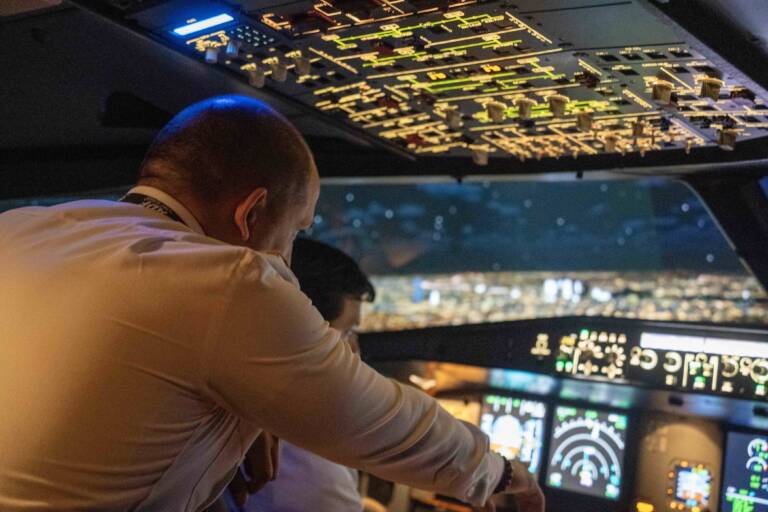
For a passenger, the flight begins when they board the plane. For the pilot, it begins hours earlier, long before the engine starts. Between arriving at the airport and receiving takeoff clearance, there’s a sequence of steps designed to make sure no important variable is left unchecked.
In this article we walk through, step by step, how a pilot prepares before every flight — from ground planning to the final check in the cockpit — and why this routine is one of the first skills taught in flight training.
📋 What Is a Preflight Briefing?
A preflight briefing is the systematic review a pilot performs before every flight, covering weather, airport conditions, airspace restrictions (NOTAMs), and the flight plan. Its purpose is to make sure the pilot has all the relevant information before deciding whether the flight can be conducted safely.
The Phases of Flight Preparation
Preparing for a flight can be split into two main blocks: ground planning, which happens before reaching the aircraft (weather, route, weight and balance, fuel), and physical preparation, which happens once the pilot is at the aircraft (visual inspection, cockpit checklist, system checks). Both blocks matter equally: a perfect flight plan is useless if the aircraft has an undetected mechanical issue, and a perfectly maintained aircraft doesn’t make up for poor weather or fuel planning.
✈️ What Is the Walkaround, or Preflight Inspection?
The walkaround is the visual and physical inspection a pilot performs by walking around the aircraft before every flight. During this check, control surfaces, tires, fluid levels, lights, antennas, and any sign of damage or wear are reviewed. It’s a mandatory step with no exceptions, even if a mechanic has already inspected the aircraft.
The 5 Key Steps Before Every Takeoff
1️⃣ Flight Planning and Weather
Before approaching the aircraft, the pilot checks the weather forecast along the route and at the destination airport, along with any NOTAMs (Notices to Air Missions) that could affect the flight, such as closed runways or airspace restrictions. This information determines whether the flight can proceed as planned, needs adjustments, or should be postponed.
Many students assume weather only matters on a day with an obvious storm. In reality, wind, visibility, and cloud ceiling are evaluated before every single flight, even on days that look perfect at a glance.
2️⃣ Weight, Balance, and Performance Calculations
The pilot calculates the aircraft’s total weight (passengers, baggage, fuel) and its distribution, to confirm the aircraft is within safe weight and balance limits. They also calculate expected performance: takeoff distance, rotation speed, and landing distance, based on the available runway and the day’s conditions.
An aircraft can be mechanically perfect and still be unsafe to fly if it’s loaded incorrectly or if the runway is too short for the day’s conditions. This calculation isn’t optional or approximate — it’s an exact numerical check performed before every flight.
3️⃣ Physical Aircraft Inspection (Walkaround)
With the flight plan set, the pilot performs the physical inspection of the aircraft: checking the condition of control surfaces, tires, oil and fuel levels, exterior lights, and any visible sign of damage. This inspection always follows the same sequence, set out in the aircraft’s manual, so nothing gets skipped.
The preflight inspection is the last line of defense before operating the aircraft. Finding a problem on the ground, before starting the engine, is infinitely simpler than discovering it once airborne.
4️⃣ Cockpit Checklist and System Checks
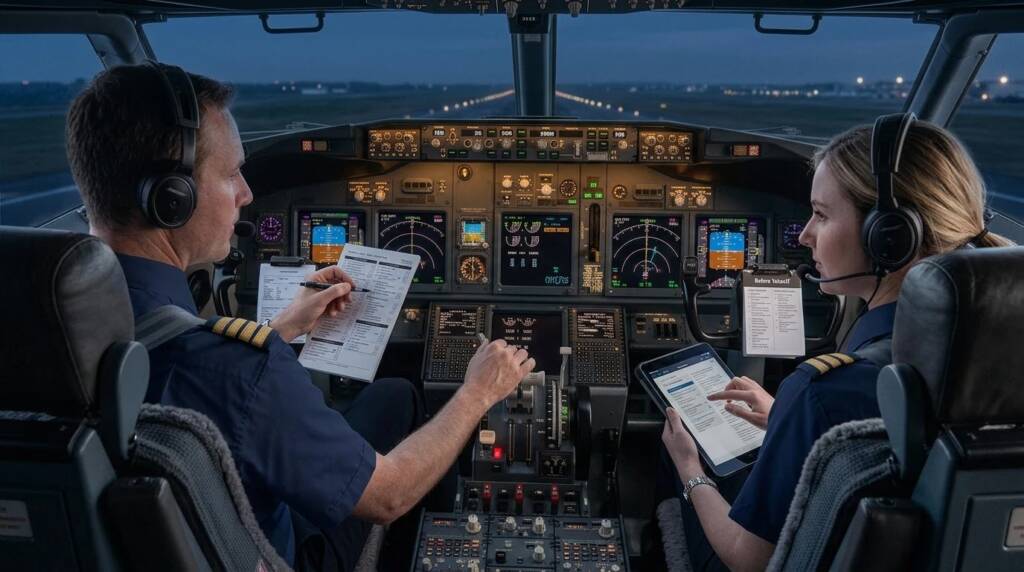
Once in the cockpit, the pilot follows the aircraft’s normal checklist: setting up instruments, testing electrical and fuel systems, verifying flight controls, and, in glass-cockpit aircraft, running a self-test of the main displays. Every item on the checklist exists for a specific reason — it isn’t just administrative paperwork.
Disciplined use of the checklist is one of the clearest differences between a properly trained pilot and one who relies on memory. Aviation demands verification, not assumption.
5️⃣ Final Briefing and ATC Coordination
As a last step, the pilot reviews the flight plan once more, confirms the correct radio frequency, and requests clearance from air traffic control (ATC) to taxi and take off. On flights with passengers or additional crew, this is also when a brief safety briefing takes place before taxiing to the runway.
This step connects all the earlier preparation with the outside world: the plan the pilot built on the ground is now coordinated with the rest of air traffic before the aircraft moves a single inch.
✅ Summary: Preparation in 5 Steps
Planning and weather → decides whether the flight is viable.
Weight and balance → confirms the aircraft can fly safely.
Physical inspection (walkaround) → catches problems before the engine starts.
Cockpit checklist → verifies every system before taxiing.
Final briefing and ATC → coordinates takeoff with the rest of air traffic.
What Happens If Something Isn't Right?
If at any of these steps the pilot finds something out of the ordinary — a light that isn’t working, a weather figure that doesn’t add up, a component with unusual wear — the flight is held until the issue is resolved. Many aircraft carry a Minimum Equipment List (MEL) that specifies which systems can be inoperative without affecting flight safety and which ones require an immediate cancellation.
This safety culture is taught from a student’s very first flight: delaying or canceling a flight out of caution is never a mistake, even if the review later shows there was no real problem. The right decision always puts safety ahead of the schedule.
How We Train This Routine at ADF Flight School
At ADF FLIGHT SCHOOL, every student learns the preflight preparation routine from their very first lessons, using the same checklists and procedures they’ll use throughout their career. Our Cessna 172 fleet, equipped with Garmin G1000 NXi, includes a digital system self-test that fits naturally into this routine. With more than 40 years of history and over 8,000 pilots trained for the world, we know that good preparation habits are built from the first flight — not improvised later on.
If you’d like to learn more about our training programs, check out our available programs or talk directly with our team.
Commercial Pilot
Your Commercial Pilot Certificate
Programs
All our FAA courses
Contact Us
Talk to an advisor today
Frequently Asked Questions About Preflight Preparation
❓ How long does preparation take before a flight?
It depends on the type of flight, but for a local training flight, full preparation — planning, calculations, and walkaround — usually takes between 30 and 60 minutes before starting the engine. Longer or more complex flights require more ground planning time.
❓ What happens if the weather isn’t favorable on flight day?
If conditions don’t meet the required minimums for the planned type of flight, the pilot adjusts the route, waits for improvement, or cancels the flight. The decision is based on clear rules, not a subjective impression of the weather.
❓ Do pilots always inspect the aircraft themselves even when mechanics are available?
Yes. The walkaround is the pilot’s sole responsibility before every flight, regardless of whether a mechanic has already inspected the aircraft. It’s an independent check specifically designed to catch anything that may have changed since the last inspection.
❓ What is a NOTAM?
NOTAM stands for “Notice to Air Missions.” It’s an official notice informing pilots of temporary conditions that affect flight safety, such as closed runways, new obstacles, or airspace changes. Checking NOTAMs is a mandatory step in planning any flight.
❓ Can a pilot cancel a flight on their own decision?
Yes, and in fact it’s their responsibility to do so if something doesn’t meet safety standards. Final authority over whether a flight takes place always rests with the pilot in command, regardless of any external pressure to stick to a schedule.
