
Becoming a commercial pilot is an ambitious goal, but the path rarely moves in a straight line. Every year we see students who take one, two, or even three years longer than expected to finish their training — not because they lack talent, but because of decisions that could have been avoided with the right information from the start.
In this article we cover the 5 most common mistakes that delay a pilot’s career, and at the end we explain how ADF FLIGHT SCHOOL helps our students avoid them from day one.
Did you know…?
According to flight instructors across the industry, most training delays aren’t caused by the difficulty of the program itself, but by administrative or financial decisions made — or postponed — before a student ever gets in the cockpit.
Mistake #1: Not getting the medical exam done on time
One of the biggest mistakes prospective student pilots make is delaying their FAA medical examination.
While FAA regulations allow students to begin ground school and even fly with a flight instructor without first obtaining a medical certificate, it is highly recommended to complete the medical examination as early as possible. Doing so ensures that you meet this essential requirement before investing significant time and resources in your flight training.
If the exam uncovers a condition that requires additional review by the FAA in Oklahoma City, that process can take weeks or even months. The sooner you take care of it, the more room you have to resolve any surprises without derailing your timeline. You can read our full guide on the FAA medical exam to know exactly what to expect.
Mistake #2: Choosing a school based on price alone
A low price can be tempting, but in flight training it almost always reflects something: less aircraft availability, high instructor turnover, older fleets, or a program that isn’t structured to take you from start to finish.
Choosing a school purely on upfront cost usually ends up more expensive in the long run — repeated flight hours, new instructors who don’t know your progress, or training that doesn’t meet the standards airlines expect. Before deciding, compare the total cost of the full program, not just the hourly rate.
Mistake #3: Interrupting training
Long pauses — whether due to work, money, or motivation — are one of the most common causes of delay. Flying is a skill that fades with time: after several weeks without practice, many students need to repeat lessons to regain the level they had already reached, which means more hours and more cost.
Consistency matters more than intensity. A student who flies two or three times a week consistently usually finishes sooner than one who trains intensely for a month and then stops for several months.
Mistake #4: Not planning a budget
Flight training has costs beyond flight hours: the medical exam, study materials, FAA written exams, the final practical test, and in some cases extra hours if weather or aircraft availability cause delays. Many students only budget for the base program cost and run out of funds partway through.
Planning your budget with a realistic margin — including unexpected costs — lets you train without pauses forced by lack of funds, which is exactly the kind of interruption we described above.
Mistake #5: Neglecting aviation English
All air traffic control communications in the United States are conducted in English, and the FAA requires meeting ICAO’s English language proficiency standards for the licenses. For international students, underestimating this requirement is one of the mistakes that costs the most time to fix midway through training.
It isn’t just about conversational English — it’s about handling aviation phraseology fluently under pressure. Working on this from the beginning, alongside flight lessons, keeps it from becoming an obstacle later on.
How ADF Flight School helps you avoid these mistakes
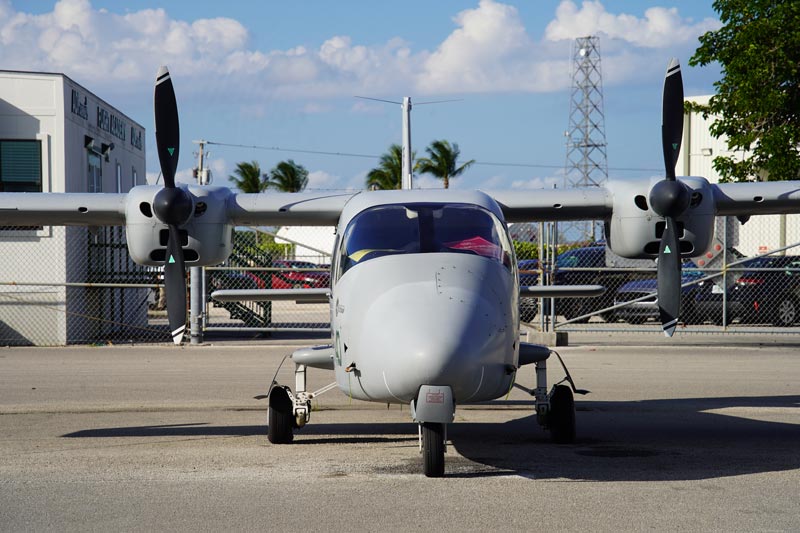
With more than 40 years of history and over 8,000 pilots trained for the world, at ADF Flight School we’ve seen these mistakes repeat themselves again and again, so we’ve built our program to prevent them:
- Medical certificate from day one: we guide every student on which certificate class to apply for and connect them with a trusted AME in Miami during their first week.
- Transparent costs: we present the total estimated cost of the full program, not just the hourly rate, so you can plan with real numbers.
- Structured schedule: our school builds a consistent study plan with close follow-up to avoid long pauses that set your progress back.
- Program financial guidance: our team helps you anticipate additional costs (exams, practical test, materials) before you start flying.
- 100% English-Language Training: All ground and flight instruction is conducted in English, allowing you to develop aviation terminology, standard phraseology, and communication skills from day one—the same language used throughout the international aviation industry.
Start your career without delays!
At ADF FLIGHT SCHOOL, located at Miami Executive Airport, we have more than 40 years of experience training pilots for the world and over 8,000 graduates. Our team is with you from the very first conversation so your training moves forward without avoidable surprises or delays.
Learn about our Commercial Pilot program and start planning your training with a clear roadmap from day one.
Commercial Pilot
Your Commercial Pilot Certificate
Programs
All our FAA courses
Contact Us
Talk to an advisor today
Frequently asked questions about pilot career delays
How long does it typically take to become a commercial pilot?
It depends on the program and the student’s dedication, but training consistently, without long interruptions, and with a planned budget, most students complete the path to Commercial Pilot in about 12 to 24 months.
What if my aviation English isn’t strong when I start?
Aviation English is not taught as a separate subject—it is an integral part of your training experience. At ADF Flight School, all instruction and flight training are conducted in English, helping you naturally develop the terminology and standard aviation phraseology you will use throughout your professional career. At ADF Flight School, we take English proficiency seriously. That’s why every prospective student goes through an English interview to evaluate whether their language skills are strong enough to succeed in flight training. This helps ensure you are prepared to make the most of your education and progress confidently toward your aviation goals.
Is it better to choose a large school or a small school?
Rather than focusing on the size of a flight school, pay close attention to what truly matters: transparency, integrity, experience, and commitment. Research the school’s safety record, reputation, and proven track record. Most importantly, choose a school that is genuinely committed to helping you achieve your goal of becoming a professional pilot.
