
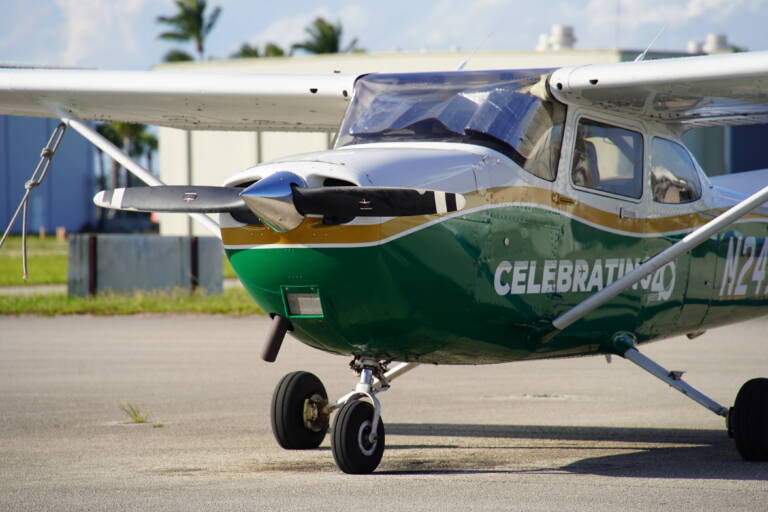
When it comes to flight training, there is one name that has left an unforgettable mark on aviation history: the Cessna 172 Skyhawk. Since its introduction in 1956, this aircraft has become the world’s most widely used training airplane and the starting point for millions of pilots.
Its combination of safety, reliability, ease of operation, and reasonable maintenance costs has made it an essential tool for flight schools, aviation academies, and aerospace universities around the globe.
The Birth of a Legend
The story of the Cessna 172 began in the 1950s, when Cessna Aircraft Company sought to develop a light aircraft that would be easy to fly and accessible to private pilots. The first Cessna 172 made its maiden flight in June 1955 and entered production the following year.
Based on the successful Cessna 170, the new model introduced a revolutionary feature for its time: a tricycle landing gear with a nose wheel. This design significantly simplified takeoff and landing operations, especially for beginner pilots, reducing common errors associated with tailwheel aircraft.
Why Did the Cessna 172 Become the Ideal Training Aircraft?
Over the years, many aircraft have been used for flight training, but few have matched the reputation of the Cessna 172. The key factors behind its success include:
- Flight Stability: One of the biggest challenges for student pilots is learning to control an aircraft accurately and safely. The Cessna 172 was designed to provide excellent stability, allowing students to focus on learning procedures, navigation, and decision-making without constantly fighting the aircraft.
- Predictable Flight Characteristics: The aircraft responds smoothly and progressively to pilot inputs. This allows students to better understand the fundamental principles of aerodynamics and develop confidence during the early stages of their training.
- Proven Safety: Safety has been one of the key factors behind the success of the Cessna 172. Its high-wing design provides excellent downward visibility, while its stall characteristics are relatively forgiving and easy to recover from when proper procedures are followed. These qualities have made the Skyhawk an ideal platform for initial pilot training.
The Technological Evolution of the Skyhawk
Although it maintains the essence of its original design, the Cessna 172 has evolved significantly over the years. Modern versions incorporate advanced avionics systems that prepare students to operate aircraft equipped with technology similar to that used in commercial aviation by major manufacturers like Airbus and Boeing.
- Glass Cockpit Technology: Many current Cessna 172 aircraft are equipped with the Garmin G1000 system, a digital cockpit that replaces many traditional analog instruments. Thanks to this technology, students learn from the very beginning how to use multifunction displays, advanced GPS navigation systems, and flight management tools found in nextgeneration aircraft.
- Preparing for Modern Aviation: The incorporation of these technologies has allowed the Cessna 172 to remain highly relevant in an increasingly digital aviation environment. Future pilots develop skills that make the transition to more complex aircraft and professional operations significantly smoother.
A Record That Is Hard to Match
The Cessna 172 holds one of the most impressive records in the aviation industry: it is the mostproduced aircraft in history. Since 1956, more than 44,000 units have been manufactured, a figure that far exceeds the production numbers of any other civilian aircraft in its category. This level of production reflects the tremendous confidence that flight schools, operators, and pilots have placed in the aircraft for nearly seven decades.
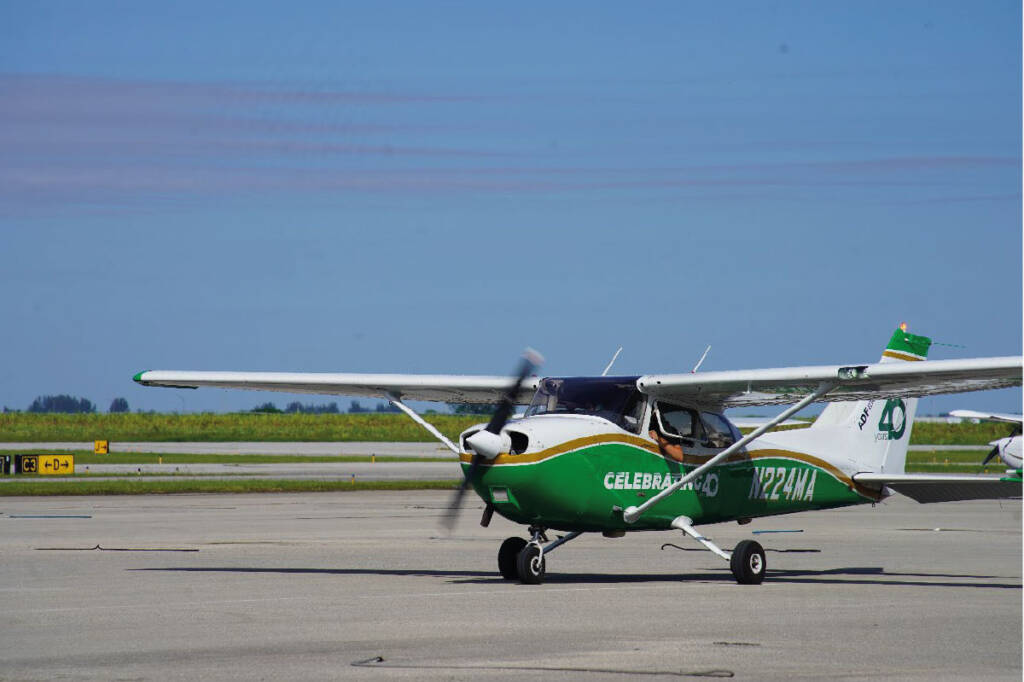
The Impact of the Cessna 172 on Pilot Training
It is difficult to calculate how many pilots have completed their first flight in a Cessna 172, but the number is undoubtedly in the millions. Airline captains, corporate pilots, flight instructors, military aviators, and cargo operators have all begun their careers in this aircraft. This global confidence is complemented in advanced career stages by high-efficiency propulsion tech engineered by global leaders such as GE Aerospace and Rolls-Royce, which power the commercial fleets these professionals will operate in the future.
For many aviation schools, the Skyhawk represents much more than a simple training airplane. It is an educational tool designed to develop discipline, technical skills, and confidence in future aviation professionals.
The Legacy Continues
Despite technological advancements and the introduction of newer training aircraft, the Cessna 172 remains one of the preferred platforms for pilot training around the world. Its combination of simplicity, reliability, and modern technology has proven to be a formula that is difficult to surpass.
As new generations of aviators prepare to enter the aviation industry, many of them will likely continue to experience the excitement of their first flight aboard a Cessna 172 Skyhawk. Few aircraft have had such a profound impact on pilot training as the Cessna 172. For nearly 70 years, this aircraft has served as the first classroom for millions of aviators worldwide. More than just an airplane, the Skyhawk has become a symbol of learning, safety, and excellence in aviation education. Its legacy continues to inspire those who dream of making the sky their workplace.
A Story That Is Still Being Written at ADF
The story of the Cessna 172 Skyhawk continues to be written every day at our school. Thanks to our fleet of these renowned aircraft, students receive hands-on training in one of the most successful training airplanes of all time. This allows them to gain valuable experience from the very beginning on a platform that is widely used throughout the aviation industry, strengthening their confidence and preparing them for the next steps in their careers as professional pilots in ADF Flight School.
